Lamu’s Big Win: The US$16 Billion Dangote Refinery
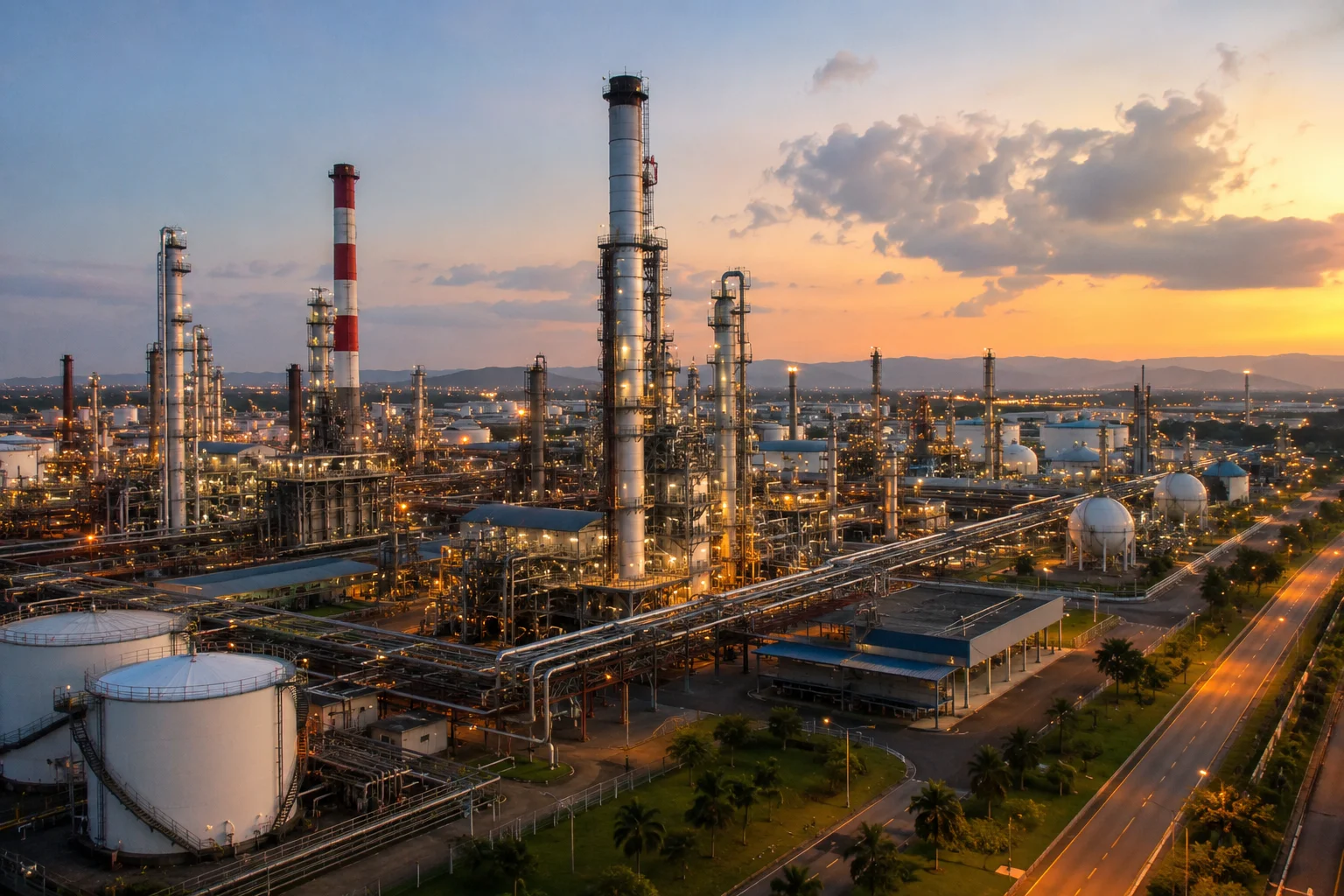
The official groundbreaking ceremony for the $16–$17 billion (Ksh 2.2 trillion) Dangote East Africa Oil Refinery in Lamu, Kenya, marks a historic shift in the East African Community (EAC) economic and industrial architecture.
Designed to process an unprecedented 700,000 barrels of crude oil per day, the mega-facility in the Lamu Special Economic Zone will alter the flow of petroleum products across Sub-Saharan Africa. Yet behind the pageantry of Heads of State gathering in Lamu lies a multi-year tug-of-war over where this energy powerhouse would be located, shifting from Tanzania’s historic port of Tanga to Kenya’s LAPSSET corridor in Lamu.
- The Rationale: From Tanga to Lamu
When Aliko Dangote first announced his intention to replicate his massive 650,000-barrel-a-day Lekki refinery in East Africa, Tanga, Tanzania, was widely regarded as the frontrunner.
The Initial Tanga Strategy
- The EACOP Anchor: Tanga is the marine terminal for the 1,443 km East African Crude Oil Pipeline (EACOP), which is engineered to transport Uganda’s inland crude oil from Hoima (Lake Albert) to the Indian Ocean coast. Locating a refinery in Tanga provides immediate access to regional crude feedstocks.
- Central Transport Corridor: A Tanga base aligned with Tanzania’s ambitions to dominate transit logistics to landlocked interior markets, including Burundi, Rwanda, the Democratic Republic of Congo (DRC), and Zambia.
- Established Footprint: Dangote already held significant industrial investments in Tanzania, notably his $500 million Mtwara cement manufacturing plant.

Why Lamu Beat Tanga and Mombasa
Despite Tanga’s early lead, Kenya secured the project through swift executive engagement between President William Ruto and Aliko Dangote. Dangote publicly admitted that before the site selection, he had never visited Lamu, and praised the Kenyan administration’s speed in securing approvals, land, and project terms.
- Deep-Water & LAPSSET Infrastructure: Lamu Port’s natural deep-water berths are uniquely designed to accommodate Very Large Crude Carriers (VLCCs). Situated within the Lamu Port-South Sudan-Ethiopia Transport (LAPSSET) corridor, the refinery integrates directly with supply routes serving Ethiopia, South Sudan, and Central Africa.
- Project Execution Speed: The deal was finalised quickly, with more than 110 heavy construction equipment units deployed to the Lamu site immediately ahead of the launch. The Kenyan leadership committed to facilitating a tight 40-month construction window.
- Regional Ownership Structure: To convert the refinery into a shared regional asset, the project structure includes an option for regional governments to acquire a 30% equity stake collectively, thereby securing long-term regional buy-in.
- Where Does Tanzania Sit on the “Dangote Question”?
Anchoring the refinery in Lamu rather than Tanga places Tanzania in a delicate geopolitical position.
- Diplomatic Distance at the Launch: While the groundbreaking was attended in person by President Yoweri Museveni (Uganda), Prime Minister Abiy Ahmed (Ethiopia), and foreign leaders from Togo and Benin, President Samia Suluhu Hassan was absent, sending formal apologies and dispatching an official delegation.
- Protecting the Tanga Corridor: Tanzania continues to prioritise the completion of EACOP and its vision of turning Tanga into a major petroleum export hub. However, without an attached mega-refinery, Tanga risks becoming primarily a transit point for raw crude rather than a high-value exporter of refined products.
- Commercial Dependence: Given the scale of the 700,000-barrel-per-day facility, the Lamu refinery will dictate fuel pricing, supply security, and petrochemical availability across the entire EAC. Tanzania will inevitably rely on Lamu’s refined output to meet domestic demand, regardless of regional competition.
- President Museveni’s Keynote
Ugandan President Yoweri Museveni delivered an unscripted speech at the Lamu launch, framing the Dangote investment through the lens of African political economy and industrial sovereignty.
Regional Refinery Comparison
| Location | Country | Planned Capacity | Strategic Focus | Primary Target Markets |
| Hoima | Uganda | 30,000–60,000 bpd | Inland domestic production & self-reliance | Uganda, DRC, South Sudan |
| Tanga | Tanzania | Stalled / Re-evaluating | Pipeline terminal (EACOP) & crude transit | Regional transit & export |
| Lamu | Kenya | 700,000 bpd | Mega-regional refining & petrochemical hub | Kenya, EAC, Ethiopia, Horn of Africa |
The Ideological Critique: “Comprador” vs. “National Bourgeoisie”
Drawing on economic theory and anti-colonial history, President Yoweri Museveni explained why Dangote’s transition from trading to heavy manufacturing marks a turning point for Africa:
“Dangote started by importing cement from outside… as a comprador, an agent serving foreign interests. But what Dangote is doing now producing cement in Nigeria and refining petroleum is becoming national industrial leadership. He is adding real energy to Africa,” said Museveni.
Museveni criticised Western advisers who previously discouraged East African nations from building oil refineries on the claim that “refineries do not make profits”, questioning why Western powers continue to operate them if they are non-viable.
Clarifying the Hoima, Tanga, and Lamu Stance
Museveni directly addressed Uganda’s position regarding the three potential refining hubs:
- Uganda’s Non-Negotiable Refinery: Museveni declared that Uganda would proceed with building its own inland refinery in Hoima. Having banned raw crude exports without local refining, Uganda will process fuel for its domestic market and for its immediate neighbours (DRC and South Sudan).
- • Revisiting the Tanga Agreement: Museveni publicly disclosed that he had previously agreed with President Samia Suluhu Hassan to pursue a refinery at Tanga. Expressing surprise at the project’s stalled momentum, Museveni said he would hold off committing state capital to further offshore projects until he verifies what happened to the Tanga proposal.
- • Plurality Over Zero-Sum Competition: Reassuring the audience, Museveni argued that East Africa’s growing population and expanding economies require multiple refining centres. He noted that countries such as Iran operate up to nine refineries, asserting that Hoima, Tanga, and Lamu can coexist without undermining one another.
- Strategic Takeaway
The groundbreaking of the Dangote East Africa Refinery in Lamu reshapes the region’s trade dynamics. Kenya secures the region’s largest industrial installation, Uganda safeguards its domestic refining rights in Hoima, and Tanzania retains its raw crude export corridor via EACOP in Tanga while adapting to Lamu’s dominance in refined fuel markets.