


Growth First: Inside Tanzania’s Biggest Budget Yet
Governments often reveal their priorities through speeches. Budgets reveal them through numbers, and the numbers in Tanzania’s 2026/27 Budget tell
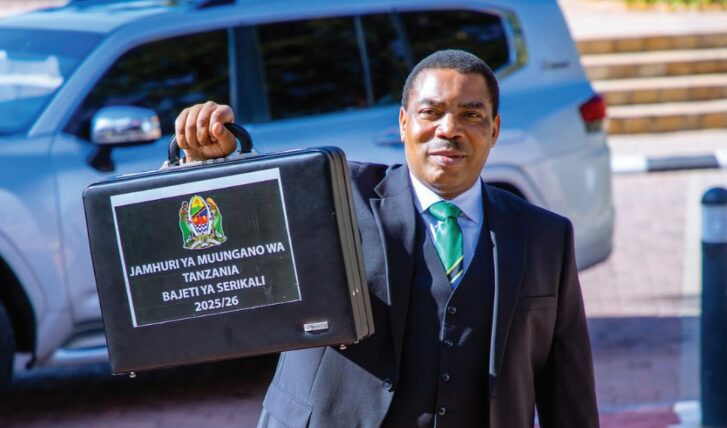
Governments often reveal their priorities through speeches. Budgets reveal them through numbers, and the numbers in Tanzania’s 2026/27 Budget tell a clear story.
The government’s record TSh 62.33 trillion budget is designed to boost economic growth through investment in infrastructure, industrialisation and domestic resources. This focus on expansion comes at a time of global uncertainty and rising living costs. The challenge will be ensuring that these plans translate into tangible improvements in people’s daily lives.
Bigger Budget, Bigger Ambitions
At TSh 62.33 trillion, the 2026/27 Budget is the largest in Tanzania’s history, representing a 10.3 per cent increase from the TSh 56.49 trillion allocated in 2025/26. The government expects economic growth to rise to 6.3 per cent while maintaining inflation within the 3–5 per cent target range.
The spending plan is heavily anchored in infrastructure, industrialisation and productive sectors. Significant allocations have been directed towards transport networks, energy projects, agriculture, healthcare, education and water infrastructure.
The Budget also reflects a stronger push to finance development through domestic resources. Domestic revenues are projected to exceed TSh 46 trillion. With declining donor support, the government is increasingly relying on taxation, improved revenue administration, and economic growth to fund its priorities.
In many respects, the Budget marks another step in Tanzania’s long-term effort to reduce dependence on external financing.
The Business-Friendly Side of the Budget
While much of the discussion surrounding the 2026/27 Budget has focused on the government’s plan to raise domestic revenue to TSh 46.23 trillion, the spending plan also includes several measures to stimulate investment and reduce the cost of doing business.
One key measure is a 12-month income tax holiday for new businesses operating under the presumptive tax regime. This is intended to ease the burden on small enterprises during their first year of operation. The government hopes the measure will encourage business formalisation and support entrepreneurship, particularly among SMEs, which account for a significant share of Tanzania’s private sector.
Manufacturers have also received a major boost through the permanent extension of the VAT deferment facility on imported capital goods. While the government has not attached a specific fiscal cost to the measure, the incentive allows investors to defer payment of the standard 18 per cent VAT on qualifying machinery and industrial equipment at the point of importation, significantly improving cash flow for capital-intensive projects.
The transport and energy sectors are also benefiting from new incentives. The government has introduced tax breaks for Compressed Natural Gas (CNG) infrastructure and electric vehicles (EVs) to reduce reliance on imported fuel and accelerate the transition to cleaner energy. These measures complement existing fuel stabilisation initiatives and broader investments in the energy sector.
For investors, the message is clear: the government wants businesses to invest, expand and create jobs while supporting its industrialisation agenda. The challenge, however, will be ensuring that these incentives are sufficient to offset persistent concerns around regulatory compliance, administrative efficiency and subdued consumer purchasing power.
Where the Debate Begins
While the government has positioned the spending plan as growth-oriented, several measures are already attracting debate.
Among the most widely discussed proposals is the introduction of levies on sugar and cigarettes to finance Universal Health Coverage (UHC). Public health advocates argue that the measure provides a sustainable funding mechanism for healthcare. Critics, however, contend that sugar remains a widely consumed household commodity and that any additional costs are likely to be passed on to consumers.
Questions have also emerged regarding the pace at which the government intends to increase revenue collection. While most businesses support broadening the tax base, some are concerned that aggressive revenue mobilisation could place additional strain on already struggling firms, particularly SMEs.
The debate reflects a broader challenge facing many African governments: how to increase revenue without constraining economic activity.
How the Budget Is Being Received
For all its growth ambitions, the Budget is not without controversy. One of the most debated measures is the government’s decision to introduce new levies on sugar and cigarettes to support the implementation of Universal Health Coverage. The measures are expected to raise approximately TSh 7.58 billion annually, including a levy of TSh 100 per kilogramme on imported industrial sugar, TSh 100 per kilogramme on domestically produced sugar, and TSh 200 per packet of cigarettes. Government officials argue that the move creates a dedicated funding stream for healthcare while targeting products associated with public health concerns.
Some critics fear that these new taxes will ultimately increase costs for consumers. Sugar is a staple commodity for many Tanzanian households and is also a key input for industries such as food and beverage processing. Businesses warn that higher costs could be passed along the value chain, pushing up prices at a time when many households are already grappling with the rising cost of living.
Questions are also being raised about the government’s revenue ambitions. The Budget targets TSh 46.23 trillion in domestic revenue, representing an increase of more than TSh 6 trillion from the previous year’s target of approximately TSh 40.99 trillion. Achieving this objective will require stronger tax administration, improved compliance and sustained economic expansion.
Ultimately, the debate reflects a challenge facing governments across the region. Tanzania is seeking to finance a TSh 62.33 trillion Budget, reduce dependence on external financing and maintain momentum in public investment. The key question is whether it can generate the required revenue without placing additional pressure on the businesses and households expected to drive that growth.
How It Compares with Last Year
The 2025/26 and 2026/27 Budgets differ in more than just size. The 2025/26 Budget was primarily focused on strengthening fiscal stability, improving revenue collection and sustaining economic growth amid a challenging global environment.
The 2026/27 Budget appears more assertive. It places greater emphasis on industrialisation, domestic revenue mobilisation, value addition, clean energy, strategic infrastructure and long-term economic transformation. It is also significantly more reliant on domestic resources than previous budgets.
If last year’s Budget was about building fiscal resilience, this year’s Budget is about accelerating economic ambition. Whether that ambition translates into measurable outcomes will ultimately determine how it is judged.
The Bottom Line
The 2026/27 Budget tells a story about the kind of economy Tanzania seeks to become. It is a story built around industrial growth, modern infrastructure, stronger domestic revenues and reduced reliance on external financing.
The numbers are impressive. However, budgets are ultimately judged outside Parliament. They are judged by factories deciding whether to invest, businesses deciding whether to hire, farmers deciding what to plant, and households assessing whether life is becoming more affordable.