


Can Domestic Inquiries Deliver Justice? Tanzania’s Post-Election Test
Following reported post-election violence and breaches of peace during and after the October 2025 general elections, Tanzania, under President Samia
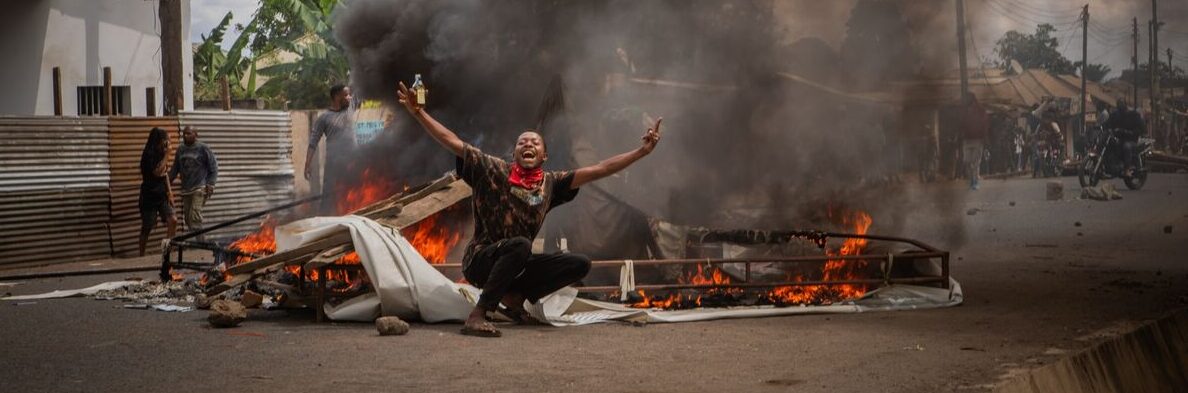
Following reported post-election violence and breaches of peace during and after the October 2025 general elections, Tanzania, under President Samia Suluhu Hassan, established an inquiry commission. The commission was tasked with identifying the root causes of the violence and examining the actions of government agencies in responding to the unrest. This move has been heralded as one of the most decisive steps toward domestic criminal accountability in the region.
The Modus Operandi
This development marks a departure from the usual pattern in which the international community has, on occasion, intervened in election-related violence. This often culminates in prosecutions at the International Criminal Court (ICC) in The Hague for crimes against humanity.
This has been evident within the East African Community (EAC) and beyond. In Kenya, the 2007–2008 post-election violence led to ICC proceedings against senior political and security actors, including William Ruto and Uhuru Kenyatta, in their personal capacities at the time. However, the cases were ultimately terminated without convictions due to evidentiary challenges and witness interference.
In Sudan, former President Omar al-Bashir was issued ICC arrest warrants in 2009 and 2010 in relation to the Darfur conflict, on charges including crimes against humanity, war crimes, and genocide. Despite this, he never surrendered to the Court.
In Uganda, Dominic Ongwen, a former commander of the Lord’s Resistance Army, was convicted by the ICC in 2021 for war crimes and crimes against humanity committed during the conflict.
Even earlier, the Rwandan genocide led to the establishment of the International Criminal Tribunal for Rwanda (ICTR) under a United Nations Security Council resolution in 1994, based in Arusha. The tribunal indicted 93 individuals and completed proceedings resulting in 61 convictions for genocide and related crimes. While historically significant in shaping international criminal law, it has been critiqued for failing to fully capture all senior-level masterminds of the genocide.
Local Solutions for Local Problems
Against this backdrop, Tanzania’s inquiry commission reflects a growing preference for domestic accountability mechanisms over external judicial intervention. The commission is mandated not only to investigate causes and responsibility but also to assess the impact of the violence, including deaths, injuries, displacement, destruction of property, damage to infrastructure, and broader economic and social consequences.
This approach reflects a broader shift toward localised transitional justice frameworks, where states take primary responsibility for truth-seeking, institutional review, and reconciliation processes.
Case Study of Fambul Tok In Sierra Leone
A useful comparative lens is the Fambul Tok initiative in Sierra Leone, which emphasises community-led reconciliation following conflict. The model is grounded in the belief that peace cannot be imposed externally or solely through top-down institutional processes.
Fambul Tok International–Sierra Leone emerged from the recognition that communities most affected by war often possess the cultural and social resources necessary for their own healing. The process centres on local “family circles,” truth-telling gatherings, and communal bonfires where individuals share experiences, acknowledge harm, offer apologies, and pursue forgiveness.
The initiative is built on three core pillars: practice, storytelling, and education, with a focus on community participation, documentation of lived experiences, and knowledge transfer to other post-conflict settings.
The Key Takeaways
The establishment of a presidential inquiry commission in Tanzania following reported post-election violence in October 2025 represents a significant shift toward domestically led accountability mechanisms in the aftermath of electoral conflict. Unlike previous patterns in the East African region, where post-election violence has often escalated into international criminal proceedings under institutions such as the International Criminal Court (ICC), this approach signals a preference for localised truth-seeking and institutional introspection.
Historically, regional responses to electoral violence have included international interventions that culminated in high-profile prosecutions. In Kenya, ICC cases arising from the 2007–2008 post-election violence involving senior political figures were ultimately terminated without convictions. In Sudan, ICC warrants against Omar al-Bashir for crimes arising from the Darfur conflict remain unenforced. In Uganda, the conviction of Dominic Ongwen demonstrated both the reach and limitations of international criminal justice.
In Rwanda, the International Criminal Tribunal for Rwanda (ICTR), established by the United Nations in 1994 and based in Arusha, indicted 93 individuals and completed proceedings resulting in 61 convictions for genocide-related crimes. However, it has been widely critiqued for not fully prosecuting all senior-level planners of the genocide.
Tanzania’s inquiry commission reflects a “local solutions for local problems” paradigm, emphasising national ownership of transitional justice processes. Rather than immediately externalising accountability to international courts, the commission is mandated to examine the root causes of violence and assess institutional responses, including socio-economic impacts.
This approach aligns conceptually with community-driven reconciliation models such as Sierra Leone’s Fambul Tok initiative, which demonstrates that sustainable post-conflict recovery can be achieved through grassroots truth-telling, dialogue, apology, and forgiveness rooted in local cultural practice.
Ultimately, the Tanzanian model suggests an evolving shift in post-election conflict management in Africa, from external judicial intervention toward hybrid or domestically anchored transitional justice mechanisms. Its success will depend on whether it achieves independence, inclusivity, and credibility in its approach to responsibility for violence.