


From America With Love: How Trump’s Tariffs Cut Diaspora Support
Recently, the U.S. House Budget Committee proposed to fast-track Trump’s “One Big Beautiful Bill Act”, which seeks to impose a
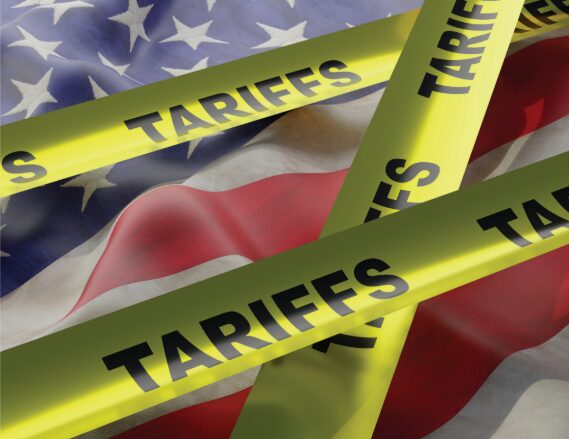
Recently, the U.S. House Budget Committee proposed to fast-track Trump’s “One Big Beautiful Bill Act”, which seeks to impose a 5% tax on all international money transfers made by individuals who are not U.S. citizens. This includes non-immigrant and green card holders (such as those on H-1B visas). However, the 5% remittance tax will not apply to transfers made by a “verified U.S. sender”, that is, anyone who is a U.S. citizen or national.
The United States is the largest source country of remittances globally, with an estimated annual outflow of $70 billion. It is a leader in absolute dollar terms and in the number of recipient countries affected. This figure accounts for about 20% to 25% of all global outflows. Saudi Arabia comes in second with around $40 billion, slightly more than half of the U.S.’s global contribution.
Regarding Sub-Saharan Africa, Nigeria, Ghana, and Kenya are amongst the top earners of remittances on the continent, with Nigeria netting in $30 billion annually. In 2023, Nigeria received $19.5 billion from the U.S. as remittances, while Ghana and Kenya received $4.6 billion and $4.2 billion, respectively.
In comparison, Tanzania’s remittance inflows were modest, though the country experienced a significant increase, reaching approximately $747 million and marking a 34.7% rise from the previous year’s $556 million. The growth can be attributed to several factors, such as improved financial channels through digital payment systems and mobile money platforms, which have facilitated easier and more cost-effective transfers. Tanzania remittances are usually drawn from the United States, the United Kingdom, and Canada. The diaspora population in the source country often determines remittance amounts.
It is estimated that 200,000 Kenyans live in America. For Tanzania, approximately 40,420 were said to be living in the US in 2023, without accounting for their descendants. In 2024, the World Bank projected that remittance flows to Sub-Saharan Africa would continue to grow, albeit at a modest pace of 2.4% in 2025. However, this estimate was made before President Trump came to power, and is likely to be lower if his proposed bill is passed.
Remittances offer a buffer in foreign exchange and significantly contribute to the GDPs of emerging economies. Tanzanian remittances make up 0.9% of the country’s GDP. In 2023, the World Bank estimated that the average cost of sending $200 from the U.S. to Tanzania was approximately 6.4%. If one has already deducted the 5% tax, then this figure will reduce to USD 177.84. If you deduct the exchange rate margin and conversion fees, the final figure received is even less. This calculation does not include the amount that remittance service providers will charge to provide the service of collecting the tax for the government.
Several problems arise with this bill. The first is that of undocumented migrants. They may now be forced to use informal and unregulated channels to avoid the tax. This is also an option that those with visas will explore. If passed, it will lead to other remittance-sending countries like the United Arab Emirates (UAE), Switzerland, and Germany following suit.
If President Trump’s bill is passed, it will fit into his broader policy agenda, focusing on tax reform, border security, and immigration control. The law could set a cycle of fewer immigrants in motion, leading to fewer remittances. Countries that rely heavily on remittances to support their economies must, therefore, be watchful of that. However, many will likely turn to informal channels to remit money back home. This may also push the growth of cryptocurrencies as alternative channels for sending money internationally since these can bypass traditional remittance fees and taxes. It’s a wait-and-see situation.