El Niño Is Coming & Tanzania Is Trying Not to Pay the Same Price Twice
Tanzania is bracing for heavy rain. Across the country, crews are clearing drains to prevent streets from flooding. Along waterways, residents are being urged to move to safer ground before the water rises, and authorities are racing to prepare roads, farms, homes and public services for a rainy season that could put them to the test. The warnings have come early this year.
The Tanzania Meteorological Authority (TMA) expects the 2026 Vuli rains to be strongly influenced by El Niño, with normal to above-normal rainfall forecast across several parts of the country. November is expected to see some of the heaviest rainfall, with wet conditions potentially persisting beyond the usual end of the season in December and into January 2027.
For communities used to heavy rain turning streets into rivers and damaging homes and roads, the forecast is shifting the conversation. The question is no longer only how much rain will fall, but how much can be done before it does.
Zanzibar Moves Before the Rain
In Zanzibar, President Hussein Ali Mwinyi has urged residents to follow official forecasts, avoid low-lying areas, valleys and waterways, and relocate where necessary. Municipalities in Unguja and Pemba have also been directed to clear drains and waterways.
“The government, through its security forces and relevant institutions, is continuing preparations to respond to challenges that could arise from El Niño and the expected heavy rains,” Mwinyi said after Friday prayers at Masjid Swafaa in Gongoni on 11 September.
The warning matters in Zanzibar because flooding is not simply about water entering homes. Heavy rain can disrupt tourism, transport, and small businesses; contaminate water supplies; and render roads impassable. For a family in a low-lying neighbourhood, a blocked drain can become a much bigger problem within hours.
The Risk Goes Beyond Zanzibar
TMA’s outlook covers a much wider area. The Lake Victoria Basin, northern Kigoma, the northern coast and the northeastern highlands are expected to receive normal to above-normal rainfall. In the Lake Victoria Basin, the rains are expected to begin between late September and early October, while Dar es Salaam, Tanga, northern Morogoro, the Coast Region, Unguja and Pemba are expected to see the season begin in October.
Heavy rainfall does not automatically cause flooding. What happens depends on factors such as rainfall intensity, drainage, river levels, soil conditions and local geography. However, Tanzania has plenty of reasons to take the risk seriously.
In Dar es Salaam, the Lake Victoria Basin and other flood-prone areas have repeatedly experienced damaging rainfall. Roads and bridges are particularly vulnerable, while prolonged rainfall can also affect agriculture, construction, and water and energy infrastructure.
For farmers, too much water can damage crops just as surely as too little. TMA has warned that excessive soil moisture and flooding could affect crop growth and agricultural infrastructure, and that contaminated water could increase the risk of disease outbreaks.
Counting the Cost Before the Flood
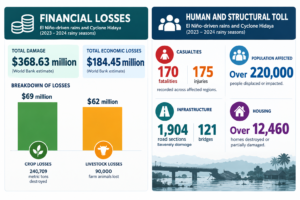
The government is now seeking to shift disaster management towards preparation rather than response. A national contingency plan is being used to prepare vulnerable infrastructure and essential services. At the same time, local authorities have been directed to identify high-risk areas, update preparedness plans, and respond to TMA warnings. The estimated requirement across government and non-government institutions involved in the response is TZS 730 billion.
That figure highlights the economic impact of the El Niño threat. Flooding is costly long after the rain stops. Damaged bridges need rebuilding, businesses lose trading days, crops are destroyed, and displaced families require assistance.
The coming months will therefore be as much a test of preparedness as of the weather. Tanzania already knows where many of its flood risks lie. It has a forecast, months of warning, and memories of the cost of previous heavy rains. The question now is whether that warning will translate into action before the water arrives.