


The Cost of Coexistence: At the Frontlines of Human-Wildlife Conflict
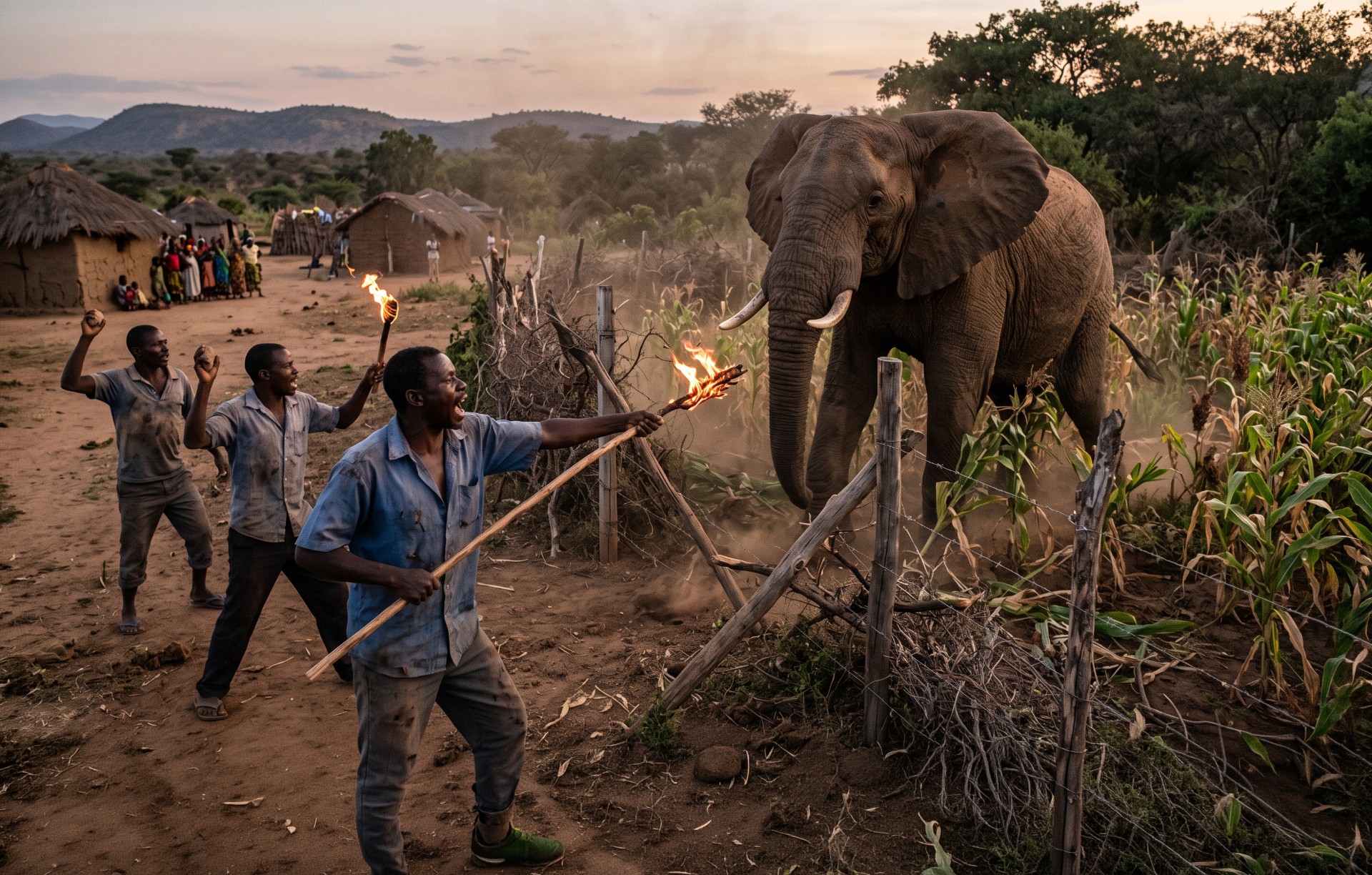
As migration continues to shape Africa’s future, Tanzania is positioning itself not only as a conservation leader but also as a country confronting the complex realities of living alongside wildlife. From the Serengeti to its forests, wetlands and wildlife corridors, Tanzania protects some of Africa’s most remarkable species. Yet beyond the safari vehicles and conservation headlines is a story communities live every day as they share these landscapes with wild animals.
Imagine waking to find an elephant has walked through your farm overnight. Crops are trampled, a fence is broken, and months of hard work are lost before the day begins. For families living near the Serengeti, this is not a scene from a documentary; it’s reality.
The Serengeti is one of Tanzania’s greatest conservation treasures, famous for the wildebeest migration and vast numbers of wildlife moving across its grasslands. Beyond the park boundaries, however, communities farm, keep livestock and raise families. The same landscape that supports wildlife also sustains people.
When elephants leave protected areas in search of food and water, they can enter farms and settlements, destroying crops and property and, in some cases, injuring or killing people. Elephants are not alone. Communities also encounter hippos, buffaloes and other wildlife as animals search for food and water.
Wild animals do not recognise the boundary between a national park and a farm. They follow established routes in search of food, water and shelter, but these routes are becoming harder to navigate as farms, settlements and roads expand.
Climate change is adding to the pressure. Rainfall is becoming less predictable, dry periods can last longer, and water and vegetation are becoming harder to find. As resources diminish inside protected areas, wildlife may travel farther. Meanwhile, communities facing unreliable rainfall and changing agricultural conditions become increasingly dependent on available land and water.
The result is a difficult competition for the same resources. Tanzania has introduced measures to reduce these conflicts through institutions such as the Tanzania Wildlife Management Authority (TAWA), the Wildlife Division and Tanzania National Parks Authority (TANAPA). These include rapid-response teams, fencing, wildlife monitoring, community awareness and other deterrents.
In parts of the western Serengeti, electric fencing has been introduced to keep elephants away from farms. At the same time, researchers have tested drones in northern Tanzania to help move elephants away from agricultural areas and settlements. Other communities have experimented with beehive fences, using elephants’ natural fear of bees to protect crops while creating opportunities for honey production.
These efforts offer hope, but they are not a complete solution. Fences require maintenance, rapid-response teams must arrive in time, and community programmes need sustained support.
The bigger challenge lies in preventing conflict before an animal reaches a farm. If wildlife corridors disappear, wetlands are degraded, and water becomes scarce, conflict will continue regardless of how many fences are built. Coexistence must therefore mean more than keeping wildlife away from people. It means creating enough space for both to survive.
Protecting wildlife corridors, restoring degraded habitats and carefully planning settlements and agriculture can help preserve animal movement routes. Communities also need climate-resilient livelihoods and reliable access to water. Crucially, people living alongside wildlife must have a voice in conservation planning. They know which routes animals use and which farms are most vulnerable.
The farmer does not necessarily hate the elephant. The farmer fears losing a harvest, while the elephant does not understand the boundary. Neither chose the conflict.
Perhaps the better question is: How did we let their homes get so close?
Tanzania’s conservation success should be measured not only by the wildlife it protects or the tourists who visit the Serengeti, but also by the people who live alongside those animals. If conservation is to endure, communities must feel that wildlife is something they can live with, not something they must constantly fear.
The future of Tanzania’s wildlife depends on coexistence, but coexistence can only work when both people and wildlife have room to live.