


Beyond Borders: Why the EAC’s Constitutional Consultations Could Redefine the Region’s Future
The East African Community’s (EAC) decision to commence public consultations in Rwanda on the drafting of a constitution for the proposed Political
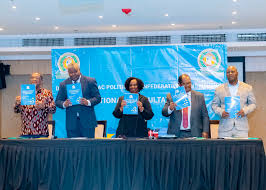
The East African Community’s (EAC) decision to commence public consultations in Rwanda on the drafting of a constitution for the proposed Political Confederation may appear, at first glance, to be another procedural exercise in the region’s decades-long integration agenda. Beneath the legal processes lies one of the most consequential public policy conversations East Africa has undertaken in recent history. The consultations represent an opportunity to determine not merely how governments cooperate. Still, more than 340 million East Africans will live, trade, work, travel, and participate in a shared regional future. They are a reminder that regional integration is no longer solely about tariffs and customs procedures but increasingly about governance, citizenship and collective prosperity.
From Economic Integration to Political Community
Since its revival in 2000, the EAC has steadily advanced through successive stages of integration. This began with the Customs Union in 2005, followed by the Common Market in 2010, while efforts towards a Monetary Union continued. The proposed Political Confederation constitutes the next transitional phase before the eventual Political Federation. This objective was endorsed by EAC Heads of State in 2017 after they recognised that deeper economic integration cannot be sustained without stronger political coordination.
This progression reflects lessons drawn from regional and global experience. Markets may integrate relatively quickly, but institutions, laws and political systems often lag. Consequently, fragmented governance continues to undermine cross-border investments, delay infrastructure projects, complicate labour mobility and weaken collective responses to regional crises. The Political Confederation seeks to address these structural gaps by establishing common governance frameworks while allowing Partner States to retain their sovereignty during the transition towards a fuller federation.
Why Public Consultations Matter
Perhaps the most significant aspect of the current exercise is not the constitutional drafting itself but the deliberate emphasis on public participation. Across Kigali, Rubavu, Huye and Nyagatare, constitutional experts are engaging governments, parliamentarians, the judiciary, civil society, academia, businesses, youth, women and persons with disabilities to shape the proposed constitutional framework. The objective is to ensure that the eventual Constitution reflects the aspirations of East Africans rather than becoming an elite political compact negotiated behind closed doors.
This people-centred approach is particularly important because political integration ultimately succeeds or fails based on legitimacy. Citizens are more likely to embrace shared institutions when they believe they have influenced their creation. Conversely, constitutions developed without meaningful public ownership often struggle to command confidence, particularly where questions of sovereignty, national identity and political accountability arise. For the EAC, therefore, consultation is not simply good governance but a prerequisite for durable regional integration.
The Economic Stakes Extend Beyond Politics
While discussions surrounding the Political Confederation naturally focus on governance, the larger implications are profoundly economic. The EAC today represents one of Africa’s largest regional markets, with a combined population exceeding 340 million people and a collective GDP approaching US$400 billion. Intra-regional trade has expanded significantly over the past two decades. However, it still accounts for a relatively modest share of the bloc’s overall commerce compared to more integrated regions such as the European Union.
A more coherent political framework has the potential to accelerate this trajectory. Harmonised regulations could reduce compliance costs for businesses operating across multiple jurisdictions. Coordinated foreign policy could strengthen East Africa’s bargaining position in international trade negotiations. Common approaches to infrastructure planning, digital governance and investment promotion could create greater certainty for investors while reducing duplication among Partner States.
For businesses, particularly those operating in banking, logistics, manufacturing, telecommunications and digital services, constitutional clarity around regional governance would improve long-term planning and encourage greater cross-border expansion. In many respects, investors value institutional predictability as much as market size, and a well-designed Political Confederation could enhance both.
Balancing Sovereignty with Shared Governance
Even so, important policy questions remain unresolved. The consultations are expected to examine governance structures, the allocation of powers, institutional responsibilities, citizens’ rights, and decision-making mechanisms within the proposed Confederation. These issues strike at the heart of national sovereignty and will inevitably generate robust debate across Partner States.
The challenge will be finding an equilibrium between regional effectiveness and national autonomy. Citizens will rightly seek assurances that deeper integration strengthens rather than diminishes democratic accountability. Governments, meanwhile, will need confidence that regional institutions complement domestic constitutional arrangements rather than create competing centres of authority. Successfully navigating these tensions will determine whether the Confederation becomes a practical governance framework or remains an aspirational political project.
A Test of East Africa’s Collective Political Maturity
Ultimately, Rwanda’s consultations are about much more than drafting constitutional provisions. They represent a test of whether East Africa is prepared to translate decades of economic cooperation into a more coherent political community capable of addressing increasingly complex regional challenges. Climate change, transnational security threats, digital regulation, migration, public health emergencies and global geopolitical competition are problems that rarely respect national borders.
Indeed, the COVID-19 pandemic, disruptions to global supply chains and evolving geopolitical realignments have demonstrated that regional resilience increasingly depends on coordinated policy responses. Stronger political institutions could therefore enhance not only economic competitiveness but also the region’s collective ability to manage future crises.
The consultations also present an opportunity to redefine citizenship itself. If successful, future generations of East Africans may increasingly identify with their respective nations and a broader regional community characterised by freer movement, expanded economic opportunity and shared democratic values.
As the constitutional conversations continue across EA and Partner States, policymakers would do well to remember that constitutions are ultimately social contracts rather than legal documents alone. Their legitimacy rests not in the elegance of their drafting but in the confidence citizens place in them. If the EAC succeeds in building that confidence through genuine public participation, the Political Confederation could become one of Africa’s most ambitious and enduring experiments in regional governance. Should it fail, however, the region risks adding another chapter to the long history of integration ambitions that never fully translated into lived realities for ordinary citizens.