Profile
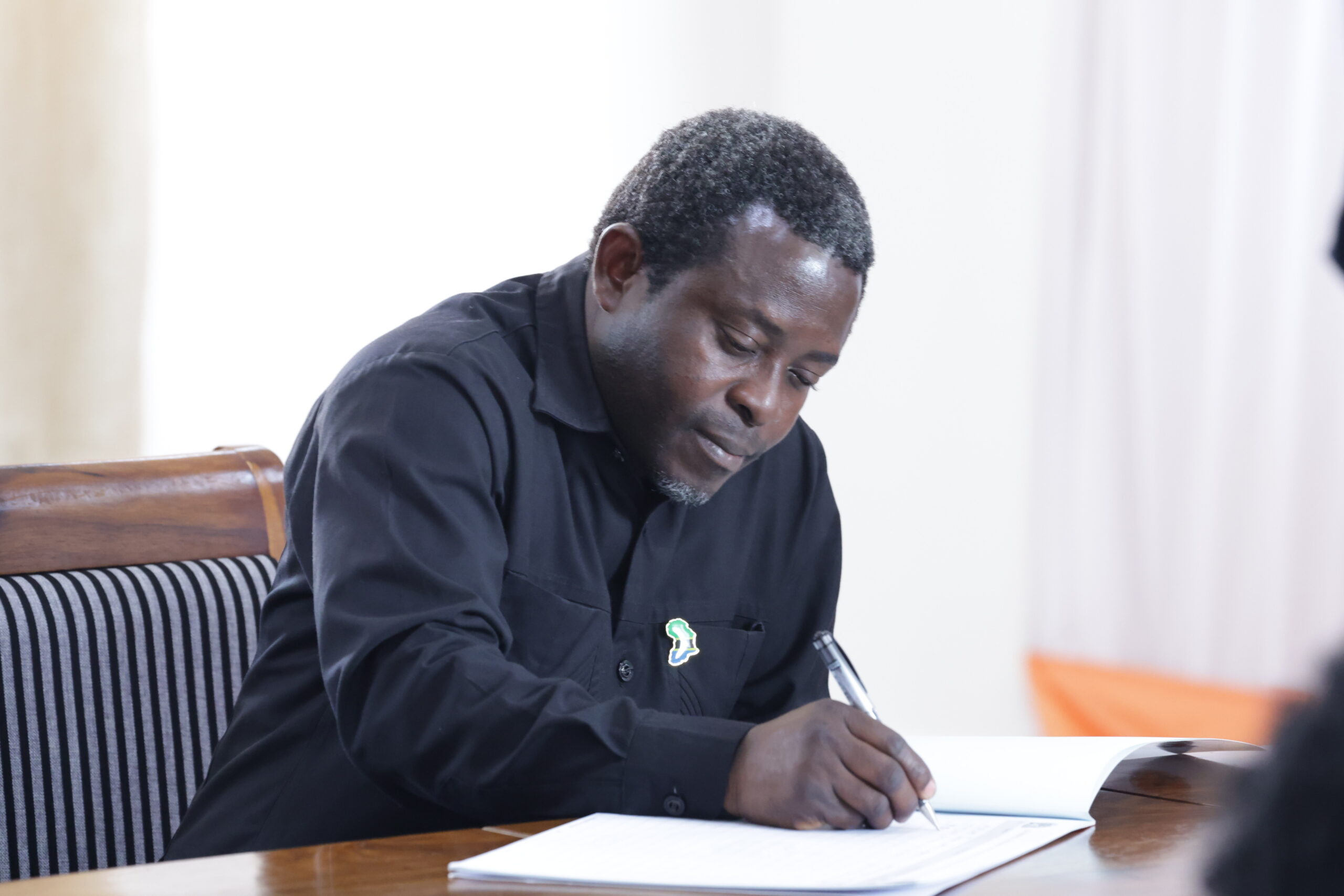
Dr Evaline Munisi, Deputy Minister, PM’s Office for Labour, Employment and Industrial Relations
Dr Evaline Wilbard Munisi has emerged as one of Tanzania’s most closely watched political figures following her appointment as Deputy Minister in the Prime Minister’s Office for Labour, Employment and Industrial Relations. She replaces Rahma Riyadh Kisuo, whose appointment has been revoked as part of the latest administrative adjustments.
Sworn in on 6 May 2026, her elevation marked a historic moment in Tanzania’s multiparty politics, as she became the first opposition politician to join the Cabinet under President Samia Suluhu Hassan’s administration. Her appointment immediately sparked a national debate, with supporters describing it as a gesture of political inclusivity and critics questioning its implications for opposition politics.
Before joining the government, Dr Munisi had steadily risen within the opposition party NCCR-Mageuzi. Around 2025, she became the party’s Secretary-General and later served as the running mate of presidential candidate Haji Ambar Khamis in the 2025 General Election. Her growing prominence within the opposition coincided with her increased visibility as a public advocate for women’s leadership, social inclusion and national unity. In April 2026, President Samia nominated her as a Special Seats Member of Parliament, signalling the start of a political realignment that would culminate in her Cabinet appointment days later.
Dr Munisi has built much of her professional reputation through wildlife and ecological research, fields in which she worked long before entering national politics. She earned a Bachelor of Science in Wildlife Management from the Sokoine University of Agriculture and later served as a Research Officer at the Tanzania Wildlife Research Institute. During this period, she participated in environmental studies focused on biodiversity conservation, habitat management and mitigating human-wildlife conflict, particularly around the Serengeti ecosystem.
She later worked as an ecologist and consultant at COSEP Company Limited, contributing to conservation planning and ecological assessments in protected areas. Her academic contributions also include co-authoring research on indigenous knowledge systems and the use of wild edible vegetables among communities around the Serengeti. These experiences helped establish her reputation as both a researcher and an environmental policy advocate.
Dr Munisi also worked in the education sector, serving as Principal of the Earth Sciences Institute of Shinyanga (ESIS), where she contributed to academic leadership and institutional development. Alongside her professional work, she remained active in regional women’s leadership networks, including organisations promoting peacebuilding and social cohesion.
Although publicly referred to as “Dr” in political and media circles, detailed information about her postgraduate academic qualifications has not been widely published in official public records. Nonetheless, her career trajectory reflects an unusual blend of science, education, politics and advocacy.
Outside formal politics, Dr Munisi is widely recognised for her work in women’s empowerment and social advocacy. She is the founder and chairperson of the Women in Leadership Forum (WLF), which aims to expand women’s participation in leadership and governance and to promote inclusive national development. She also established the Evelyn Munisi Foundation (EMF), registered in 2015, which supports widows and vulnerable women through economic empowerment programmes and vocational initiatives. Her advocacy is deeply personal, and her public profile extends beyond activism into academia and environmental conservation. Having become a widow at 26, she transformed her personal experience into a platform to support women facing economic and social vulnerability.
Today, Dr Evaline Munisi stands at the intersection of governance, environmental stewardship and women’s empowerment, embodying a political journey that spans sectors traditionally seen as separate. Her transition from opposition politics to government may continue to divide opinion, but it has undeniably positioned her among the most consequential emerging figures in Tanzania’s contemporary political landscape.